Agricultural LED Grow Lights: Crop Requirements and Operating Economics
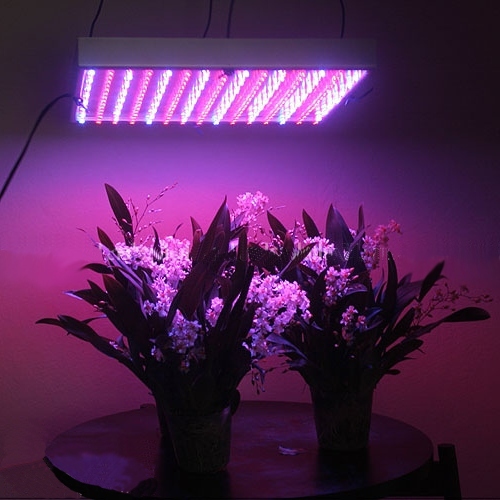
A greenhouse lighting purchase begins with a crop, a production schedule and a growing environment. It should not begin with the fixture that looks brightest to a person standing beneath it. Plants and people use light differently, and a successful installation must account for the light reaching the crop as well as the electricity needed to produce it.
Agricultural LED grow lights are therefore a systems market. Fixtures, controls, mounting arrangements, electrical capacity and climate management interact. Replacing a lamp may change several operating assumptions at once, making a simple comparison of purchase prices inadequate.
Measure the service delivered to the crop
The Department of Energy’s discussion of application-specific lighting explains why maximizing performance for human visual tasks does not automatically optimize horticultural applications. Intensity, distribution, spectrum and controls have to match the intended use. A specification expressed only in familiar room-lighting terms leaves important questions unanswered.
Growers should identify the crop area, mounting height, intended schedule and required distribution before comparing products. A fixture-level output number does not describe every point on a bench. Shading, spacing and the layout of the installation influence the result. Measurements across the growing area are more informative than a single reading taken under the center of one fixture.
Efficacy is one part of the result
A 2020 research paper on LED efficacy, indexed by the US Department of Energy’s Office of Scientific and Technical Information, distinguishes the performance of LED components from complete fixtures. Drivers, optics, temperature and operating conditions affect the conversion of electrical energy into useful light output.
The practical implication is to compare products under stated test conditions and ask what the supplied numbers include. A highly efficient component does not guarantee the same efficiency once it is installed in a working luminaire. Nor does fixture efficiency by itself establish crop yield, quality or profitability. Those outcomes need evidence relevant to the actual production setting.
Consider the climate system
Lighting adds energy to the growing environment. Changing equipment can affect the balance of radiant heat, air temperature and the work performed by heating or cooling systems. A project review should therefore include the people responsible for climate control, rather than treating lighting as an isolated electrical replacement.
For a greenhouse that also receives daylight, controls need a clear purpose. The objective might involve supplementing available light, extending a schedule or maintaining a chosen operating plan. Sensors and dimming controls need commissioning and maintenance. An installation that ignores dirty sensors or uncertain calibration may drift away from the assumptions used to justify it.
Build a crop-specific trial
A useful trial records more than power consumption. Include planting dates, crop variety, operating schedules and the conditions that might affect the result. Define the intended outcome before starting: uniformity, saleable quality, production timing or another measurable objective. Avoid choosing the success measure only after seeing what improved.
Where possible, compare an appropriate control area and document other changes in cultivation. A trial that simultaneously changes lighting, irrigation and temperature can be valuable operationally but makes it harder to attribute the outcome to one purchase. The uncertainty should remain visible when the result is presented to management.
Procurement includes maintenance
Cleaning, moisture exposure, access to drivers and replacement procedures belong in an agricultural specification. Ask how failed units are identified and replaced without disrupting the crop or creating unsafe work. Warranties should be examined alongside the availability of service and compatible parts.
Calculate ownership costs using the intended schedule, electricity tariff and any associated climate-control changes. Include installation and commissioning rather than assuming a fixture price describes the project. If a payback estimate depends on a particular yield increase, show that dependency explicitly and consider a case where the increase does not occur.
Interpreting market demand
Demand for grow lights can arise from new facilities, changes to existing greenhouses and replacement of older equipment. These categories should be separated in a market report because they involve different budgets and decision cycles. Growth in installed lighting capacity is also different from growth in a grower’s profits.
A sound account of this market connects technology with agronomy and operating economics. LED fixtures offer controllability and design options, but the buyer still needs to establish which light is required, where it must arrive and what the completed system costs to run.