Kurt Westergaard: Cartooning, Free Expression and a Contested Legacy
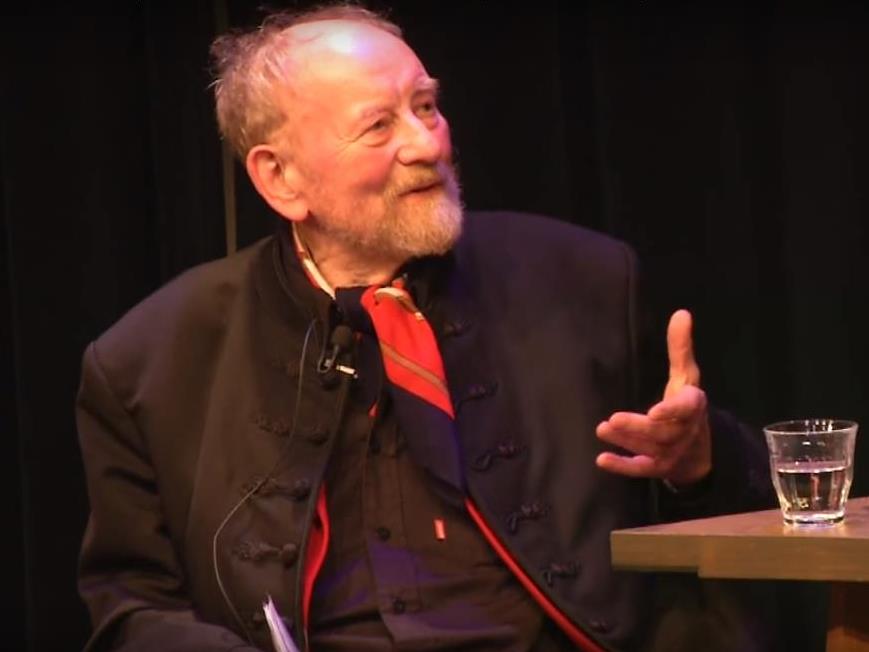
Kurt Westergaard’s death in July 2021 brought renewed attention to a career that had become inseparable from arguments about cartoons, religion and freedom of expression. The Danish cartoonist was 86. Accounts of his work often move quickly from one controversial image to diplomatic disputes and security threats. A more careful reading keeps the person, the publication decision and the consequences distinct, while recognizing how closely they became connected in public debate.
The Daily Cartoonist’s obituary roundup, published on July 18, 2021, gives his dates as July 13, 1935, to July 14, 2021. It also preserves a link to contemporary Courier coverage. This date distinction matters: the day a death is reported is not necessarily the day it occurred. The following discussion concerns that 2021 event and its editorial context.
A drawing within a publication
Westergaard became internationally known through the Muhammad cartoons published by the Danish newspaper Jyllands-Posten in 2005. His contribution was among the images that became the focus of protests and arguments about religious offense. The dispute extended beyond a newspaper’s immediate readership and entered debates about identity, minority communities and the responsibilities of publishers.
Cartoons condense an argument into a small visual space. That compression is part of their force and also a reason they can travel badly. A drawing encountered beside an editorial explanation is not experienced in the same way as an isolated copy appearing elsewhere. Readers may disagree about the intended target, and a publisher’s explanation does not settle every interpretation.
Free expression and editorial judgment
Defending the right to publish and deciding whether a particular image serves readers are separate questions. A newspaper can support expressive freedom while asking whether its framing is accurate, whether an image needs explanation and whose experience has been left out. These are ordinary editorial duties, including when the subject is difficult or unpopular.
The disagreement also needs a distinction between criticism and intimidation. Readers can object to a cartoon, challenge its premises and argue against a publication’s decision. Threatening or attacking a cartoonist is a different act. Blurring that boundary makes meaningful discussion harder and treats peaceful disagreement as though it were equivalent to coercion.
Why context needs to travel with an image
An obituary, a classroom discussion and a breaking-news report have different purposes. An image that is necessary to explain an artistic technique may be unnecessary in a brief account of a death. Editors should be able to explain the reason for reproduction and the context a reader receives, rather than treating repetition as an automatic requirement.
Captions require similar care. Identify the artist and publication, distinguish the creation date from later circulation, and avoid implying that a single cartoon represents every view within a community. When describing the response, name the people or institutions involved wherever evidence permits. Broad labels can turn a specific event into an unsupported claim about millions of people.
Reading an obituary responsibly
An obituary should make room for verified biography without pretending that a disputed legacy has one settled interpretation. It should attribute assessments and keep the chronology clear. Death reporting also calls for restraint around private medical details, family circumstances and dramatic accounts that cannot be checked independently.
For Westergaard, his role in the 2005 dispute is central to understanding why his death received international attention. That fact does not require an obituary to reproduce every claim made during the controversy. A useful account can explain the argument, acknowledge its effects and leave readers able to distinguish the cartoonist’s intentions from other people’s responses.
The work of sustaining disagreement
The lasting editorial question is how publications make difficult arguments understandable without giving up the possibility of disagreement. Accuracy, attribution and proportion are practical tools for doing that. They help a reader see what happened and why it mattered, even when the reader rejects the underlying image or the decision to publish it.
Westergaard’s life remains part of that conversation. Remembering the dates, identifying the original newspaper and separating reported facts from interpretation produces a more useful account than presenting controversy as a spectacle. It also gives the discussion a stable basis from which differing judgments can be expressed.