Global Aromatherapy Market: Demand, Segmentation and Forecast Evaluation
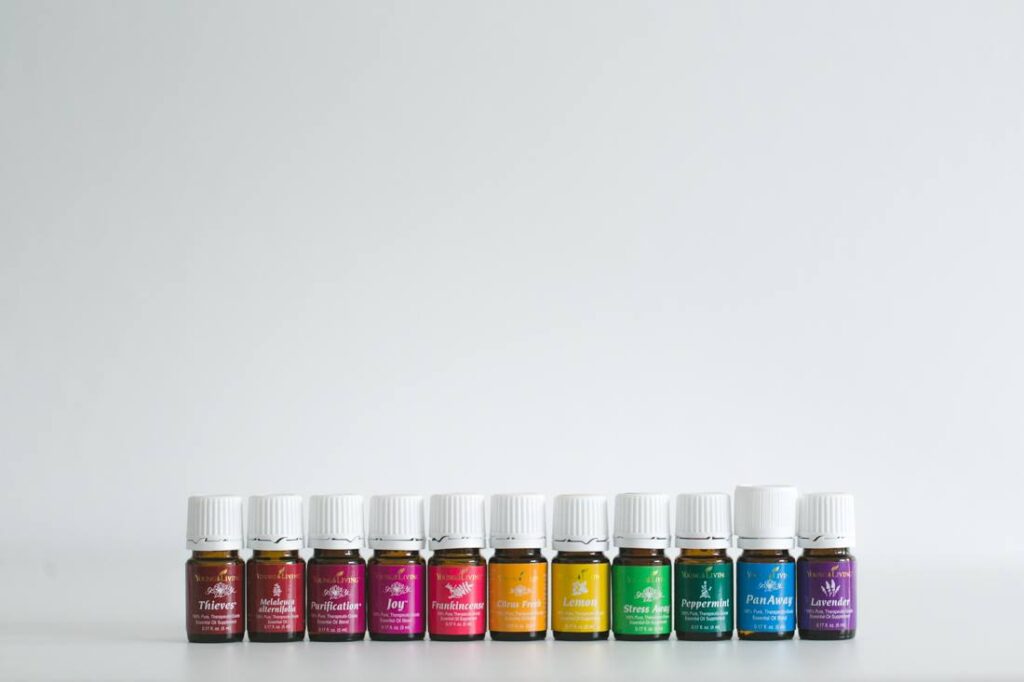
New analysis · October 21, 2026. This newly written article examines the global aromatherapy market. It does not reproduce the unavailable report or its forecast to 2025.
A global aromatherapy headline can combine very different purchases: essential oils, blended consumer products, diffusers and practitioner services. Before interpreting a growth estimate, readers need to know which of these activities it includes. A large total built from incompatible definitions is not necessarily a more informative result.
Start with the product and service boundaries
NCCIH describes aromatherapy as a complementary health approach involving plant essential oils, commonly inhaled or applied in diluted form to the skin. This description identifies a practice, not a statistical market definition. Source: NCCIH, aromatherapy.
For commercial analysis, it is useful to separate ingredients sold to other businesses, retail oils and blends, equipment, and services. A diffuser sale does not establish how much oil its owner will subsequently buy. A treatment fee may include labour and facilities as well as aromatic products. Those revenues can be reported separately before any combined estimate is attempted.
Possible growth drivers should become testable questions
Interest in scent, product discovery and repeat purchases can each be investigated, but none should be assumed to translate automatically into durable revenue. An analyst could ask whether first-time buyers reorder, whether online customers remain active after a promotion, and whether a retailer expands a range because of actual sell-through rather than initial stocking.
Distribution can also change the interpretation of growth. More outlets may increase shipments while customer purchases remain unproven. For a reliable assessment, sales into the channel and sales out to consumers should be distinguished. Returns and unsold inventory are part of that review, not inconvenient details to omit.
Global comparisons need consistent geography
A regional dataset may include different product categories or retail mark-ups from another dataset. Currency conversion introduces another choice: growth in local-currency sales is different from growth after exchange-rate movements. An international study should state the reporting currency, price basis and time period.
CBI’s essential-oils research provides a European ingredient-market perspective. It cannot, by itself, establish a worldwide aromatherapy total because oils also serve other applications and Europe is only one geography. Source: CBI European essential-oils assessment.
For a regional application of these distinctions, see our Europe aromatherapy analysis of market boundaries, pandemic context and the outlook to 2027.
Competition extends beyond the number of products
A practical comparison of consumer brands can examine clear descriptions, packaging, price per comparable unit, distribution and customer support. Ingredient suppliers need a different assessment centred on batch specifications, continuity and contract performance. Service providers require another view that includes the service description and customer experience.
These comparisons should not be collapsed into one unsupported list of “top players.” The existence of a product range proves participation, not market share. This article provides no company ranking because a comparable global dataset was not verified.
The end of a forecast period calls for evidence, not revision by guesswork
The former URL refers to a forecast ending in 2025, a period that has now passed. A retrospective review should compare the original prediction with observed results using the same definitions. Because neither the former report’s complete methodology nor a matching outcome series was recovered, this article cannot declare that prediction correct or incorrect.
It can specify how such a review should work: recover the base year, identify the included products, record the projected endpoints, locate comparable observed values and explain any revisions. Replacing the missing numbers with a new forecast would answer a different question.
What readers can reasonably conclude
Aromatherapy should be analysed as several connected businesses, with evidence requirements that match each one. Demand for a scent or a wellness experience does not establish a medical benefit. Product interest, clinical evidence and commercial revenue are distinct subjects.
No global revenue figure or CAGR is invented here. The practical value of the analysis lies in its questions: what is counted, who pays, how often customers return, and which observations support the growth claim? A report that answers those questions is more useful than a precise-looking forecast with an undefined market underneath it.