Essential Oil Aromatherapy Market: Products, Quality and Brand Comparison
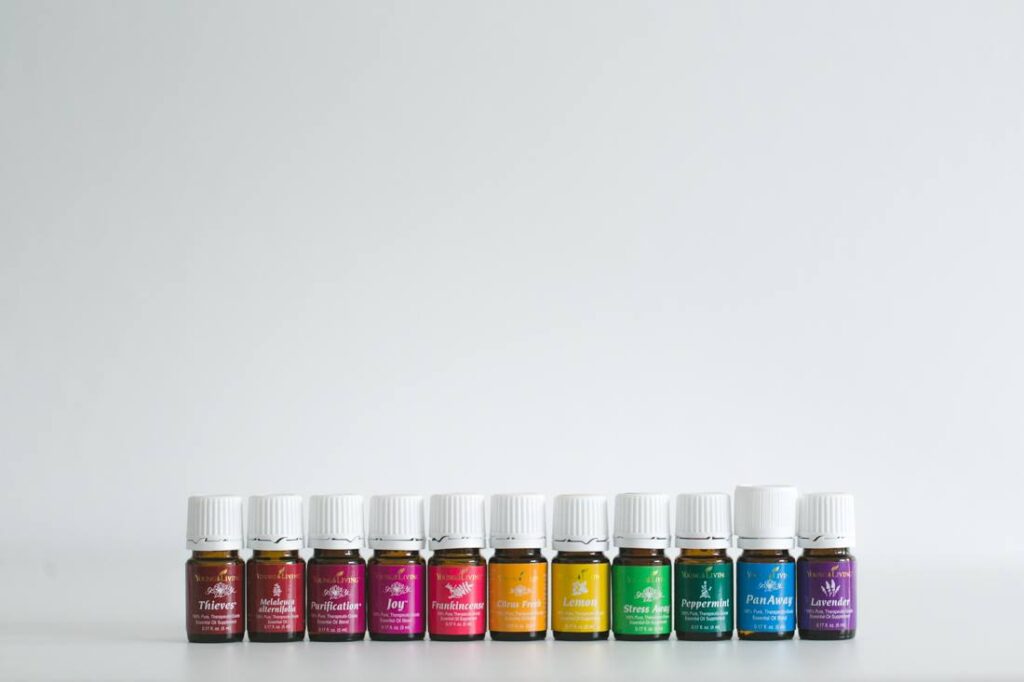
New analysis · October 21, 2026. This newly written article covers essential oils sold for aromatherapy. The former 2020 article and its company comparisons were not recovered.
The essential-oil aromatherapy market is narrower than the market for every product containing an essential oil. Oils may be sold as ingredients, consumer bottles or parts of a finished blend. A commercial assessment needs to identify the intended application and the stage of sale before drawing conclusions about demand.
Build the comparison around what is in the bottle
For a consumer comparison, record the product name, stated botanical identity, concentration, carrier ingredients, bottle size and instructions. A blend and an individual undiluted oil are different offers. Neither should be treated as a misleading product merely because it differs from the other; the question is whether the description is clear and the comparison fair.
A price comparison should use equivalent quantities and concentrations where the information is available. If it is not available, the uncertainty should remain visible. A very small bottle with extensive packaging may have a different price structure from a larger replenishment product without demonstrating a different health effect.
Traceability is more useful than an unexplained quality slogan
CBI’s fragrance-ingredient guidance emphasises consistent quality and a verifiable supply chain. Its discussion is an ingredient-sourcing reference, not an endorsement of a consumer brand. Source: CBI essential-oil sourcing guidance.
A practical assessment would ask what a quality statement actually means. Does it identify a batch, a test method, a specification or an independently checkable certification? Who prepared the information, and what does it cover? A test result becomes more informative when it can be connected with the material being sold rather than used as a generic badge.
Distribution changes the economics
Direct online sales, specialist shops and distributor-based arrangements can have different costs and customer relationships. A useful business comparison would examine the final customer price, the services included, returns, customer support and the cost of acquiring repeat buyers.
These are evaluation criteria, not findings about any particular company. The URL names several sellers, but no current, comparable dataset was verified for their aromatherapy-specific revenue. This article does not claim that those names define the whole market or establish a ranking.
Keep the evidence for health claims separate
NCCIH describes aromatherapy as a complementary health approach and notes limited rigorous research for some proposed uses. That is a reason to examine the evidence for a specific claim, rather than treating product popularity as proof. Source: NCCIH aromatherapy overview.
A market analysis can report what products are marketed for without endorsing every claim made about them. Laboratory observations, customer reviews and controlled human studies answer different questions. This article provides no treatment recommendation, ingestion instructions or dilution recipe.
Our rosemary-oil analysis explains why medicinal-product evidence cannot be transferred to every consumer oil, using the scope of an EMA assessment as a concrete example.
Measure replenishment instead of assuming it
For a consumer-oil business, first orders and repeat orders should be analysed separately. A bundle can encourage trial while leaving the longer-term consumption rate uncertain. A customer who buys several bottles in one promotion may not return for the same interval as a customer replenishing one frequently used product.
A proposed measurement plan would track comparable bottle sales, returning buyers, elapsed time between orders, refunds and margin after distribution costs. A separate ingredient business would need a plan based on contract quantities and repeat business customers. Neither dataset should be silently substituted for the other.
What a responsible market outlook looks like
A useful report declares its product boundaries, geography, sales channels and reporting period. It explains whether the numbers describe consumer spending or business-to-business shipments. It also identifies where estimates depend on private-company information that cannot be checked.
The original 2020 report was not available, and this article does not invent its market size or CAGR. The strongest starting point is a transparent product comparison supported by batch information, realistic claims and observed repeat demand. Those are tangible questions readers can investigate even when a sweeping global headline cannot be verified.