Green Roofs: Building Performance, Maintenance and Project Economics
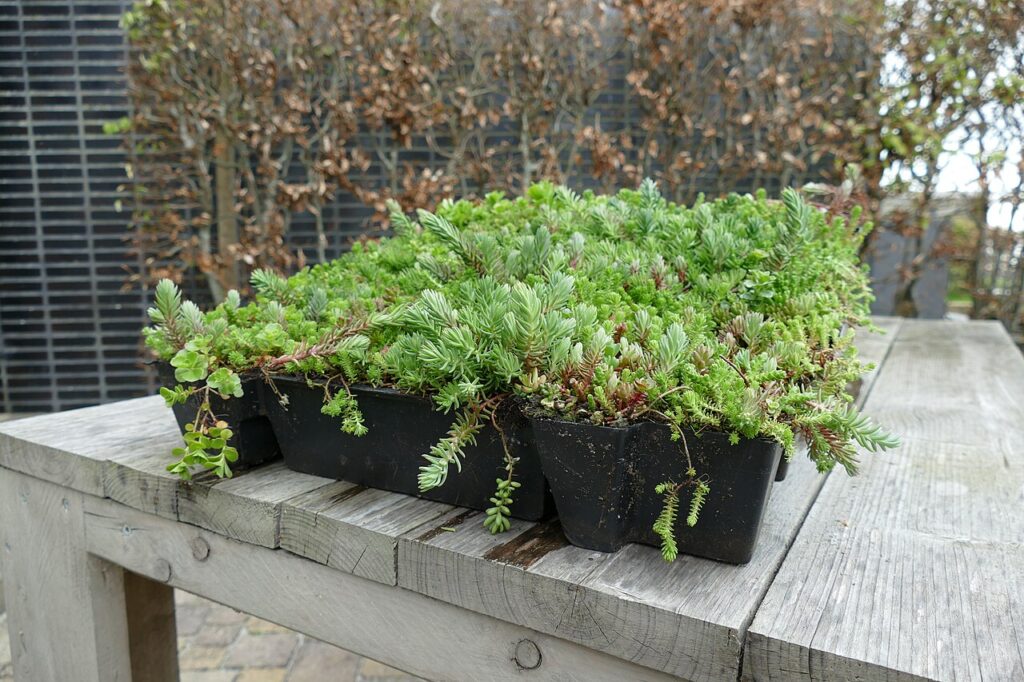
A planted roof is part of a building before it is part of a landscape. Vegetation, growing medium, drainage, waterproofing and access all have to work within the roof’s design. The appearance of a finished project can hide the decisions that determine whether it remains useful and maintainable over time.
For the green-roof market, this means project economics extend beyond buying plants. Designers, building owners, installers and maintenance providers are coordinating a system. A sound evaluation connects the intended environmental benefit with the building’s condition, the proposed construction and a realistic plan for looking after it.
Match the roof to a stated purpose
The US Environmental Protection Agency’s overview of green roofs describes vegetated rooftop layers and their potential contribution to reducing urban heat. It distinguishes roof types and considers benefits and costs. Its discussion supports examining green roofs as an option, not assuming that a result reported for one building will occur everywhere.
A project might prioritize stormwater management, a usable outdoor space, vegetation or a combination of objectives. Write those objectives down before selecting a system. They influence access, planting choices, maintenance expectations and how performance will be assessed. A roof designed mainly for vegetation is a different brief from one intended for frequent public use.
Existing conditions shape the project
The building’s structural capacity, roof condition and drainage arrangement need professional assessment. The design must account for the complete proposed system and its operating conditions, rather than the weight of plants alone. Waterproofing details and the ability to inspect them deserve attention early in the process.
This assessment can change the scope of a retrofit. If another roof component needs replacement, the owner should understand how that work interacts with the planted area. Coordinating the decisions can be more valuable than choosing a visually attractive scheme and discovering the constraints after procurement has begun.
Plants are part of an operating plan
Species selection should respond to the local conditions and the characteristics of the proposed roof system. Exposure, growing-medium depth and the intended maintenance regime influence that decision. A photograph from another climate is not a planting specification.
The plan should identify how vegetation will be established, inspected and maintained. Access routes, seasonal work and the response to unwanted growth need an owner. An installer’s completion date is therefore the beginning of another stage of work. The budget should make that continuing responsibility visible rather than treating maintenance as an optional addition.
Consider water across the whole assembly
Rainwater reaches several parts of a roof system before leaving through drainage. An evaluation should explain what the proposed assembly is designed to do and how it behaves under the conditions considered by the design team. A broad claim about “absorbing rain” is not enough to describe the drainage strategy.
Similarly, a project should distinguish an intended reduction in runoff from a verified performance result. Measurements need a defined period, weather context and comparison method. Without those details, a favorable observation can become an exaggerated annual claim. Owners need a record that remains useful when a maintenance contractor or building manager changes.
Compare project costs on the same basis
Installation, preparatory roof work, access arrangements and continuing maintenance should be separated in a quotation. A price per unit area can be misleading if one estimate includes necessary building work and another excludes it. Warranty arrangements should explain which party is responsible for the different components.
Market reports also need consistent definitions. Revenue from roof assemblies, installation services and landscape maintenance may refer to connected but different activities. New construction and retrofit projects have distinct decision cycles. Combining them without explanation makes a growth estimate difficult to interpret.
Evaluate benefits without universal promises
Energy use and environmental performance depend on the building and its setting. A proposal should identify which benefits are modeled, which are measured and which remain qualitative. This allows owners to compare alternatives and understand the assumptions behind a projected saving.
A successful green-roof project gives the building an appropriate, maintainable system and an accountable operating plan. Its visual appeal is one part of the outcome. The wider commercial opportunity depends on delivering those underlying responsibilities reliably across different buildings, climates and ownership arrangements.